
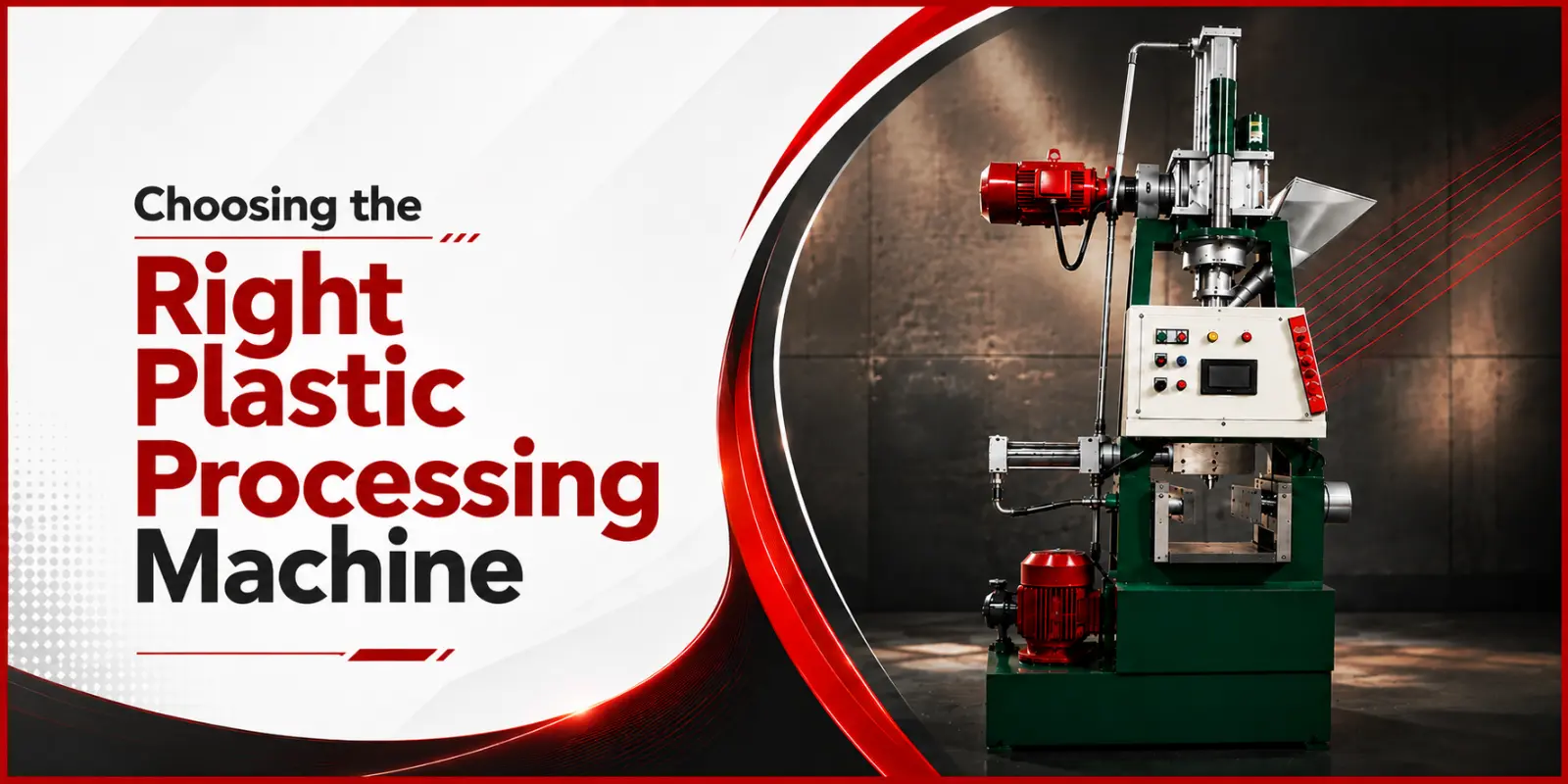
Choosing the Right Plastic Processing Machine
Selecting machinery for a plastic manufacturing unit is a capital-intensive decision that dictates operational capability, product quality, and long-term facility profitability. With numerous machinery formats, tonnage ratings, drive configurations, and screw geometries available on the market, matching machine specifications to your specific product requirements is crucial.
Making an incorrect procurement choice can result in excessive energy consumption, frequent downtime, high scrap rates, or insufficient clamping force for heavy moulds. A structured technical evaluation ensures your selected processing unit delivers maximum ROI over its operational lifecycle.
Below is a comprehensive guide to evaluating the vital engineering parameters when selecting your ideal plastic processing machine.
1. Calculating Required Clamping Force and Shot Capacity
The foundation of machine selection lies in balancing structural clamping tonnage with the total volumetric displacement required per injection cycle.
Key calculations include:
Projected Surface Area Analysis: Multiply the total frontal area of the part (plus runners) by the resin's recommended clamping factor to prevent material flashing under injection pressure.
Shot Weight Optimization: Ensure total shot weight falls between 20% and 80% of the machine's maximum displacement capacity to prevent thermal polymer degradation or incomplete mold filling.
2. Matching Screw Geometry to Resin Characteristics
Different plastic resins exhibit distinct melt behaviors, viscosities, and thermal sensitivities. The processing screw must be chosen based on the specific polymers you plan to mold.
General Purpose vs. Dedicated Screws: Standard L/D ratios work well for commodity polymers, whereas heat-sensitive resins like PVC or abrasive glass-filled materials demand specialized flight designs or bimetallic alloys.
Mixing and Shear Zones: For color masterbatch integration or blended compounds, choose screw profiles built with specialized barrier mixing zones to guarantee color uniformity.
3. Evaluating Drive Systems: Servo-Hydraulic, Electric, or Hybrid
Machine power drives determine energy consumption levels, motion accuracy, maintenance complexity, and overall noise levels within your facility.
Servo-Hydraulic Systems: Offer high clamping forces and heavy-duty reliability at a lower initial purchase price, making them ideal for thick-walled or high-tonnage industrial components.
All-Electric Machines: Deliver high position accuracy, quiet operation, and low energy usage, making them the preferred choice for cleanroom, medical, or optical component manufacturing.
Hybrid Architectures: Combine electric screw drives for fast, continuous dosing with hydraulic clamping units for high force generation.
4. Assessing Physical Frame Orientation and Mould Accessibility
Depending on whether your production demands insert placing, overmoulding, or fully automated part drop, machine orientation directly impacts operator ergonomics and floor logistics.
Horizontal Units: Excellent for high-speed, multi-cavity parts where finished components can fall freely onto a lower catch conveyor.
Vertical Machinery Configurations: Unmatched for insert positioning, cable strain reliefs, and footwear production where parts must remain undisturbed during mould closure.
5. Control Systems and Industry 4.0 Connectivity
Modern production facilities depend on real-time data access to track overall equipment effectiveness (OEE) and prevent unexpected mechanical downtime.
Intuitive PLC Interfaces: Look for touchscreen controllers that store comprehensive mould recipe data, simplifying tool changes and reducing setup time.
Remote Diagnostics and Data Logging: Integrated Ethernet interfaces allow engineers to diagnose operational errors remotely and log cycle data for quality compliance audits.
Machinery Selection Checklist
Technical Parameter | Selection Rule of Thumb |
Clamping Tonnage | Calculate 2.5 to 5 tons per square inch of total projected mould area based on resin viscosity. |
Tie-Bar Clearance | Verify physical dimensions to ensure your largest mould base fits comfortably between columns. |
Ejection Stroke | Confirm hydraulic or mechanical ejector stroke distance fully clears deep-drawn parts. |
Plasticizing Rate | Ensure the barrel can melt sufficient resin per second to match your targeted minimum cycle time. |
Final Thoughts: Making an Informed Machinery Investment
Choosing the ideal plastic processing machine requires carefully balancing part geometry, resin properties, cycle expectations, and available factory space. By systematically evaluating clamping requirements, drive technologies, screw design, and automation readiness, you can secure equipment that maximizes productivity and delivers consistent quality for years to come.